Behind the briefing · How decisions reach the counter
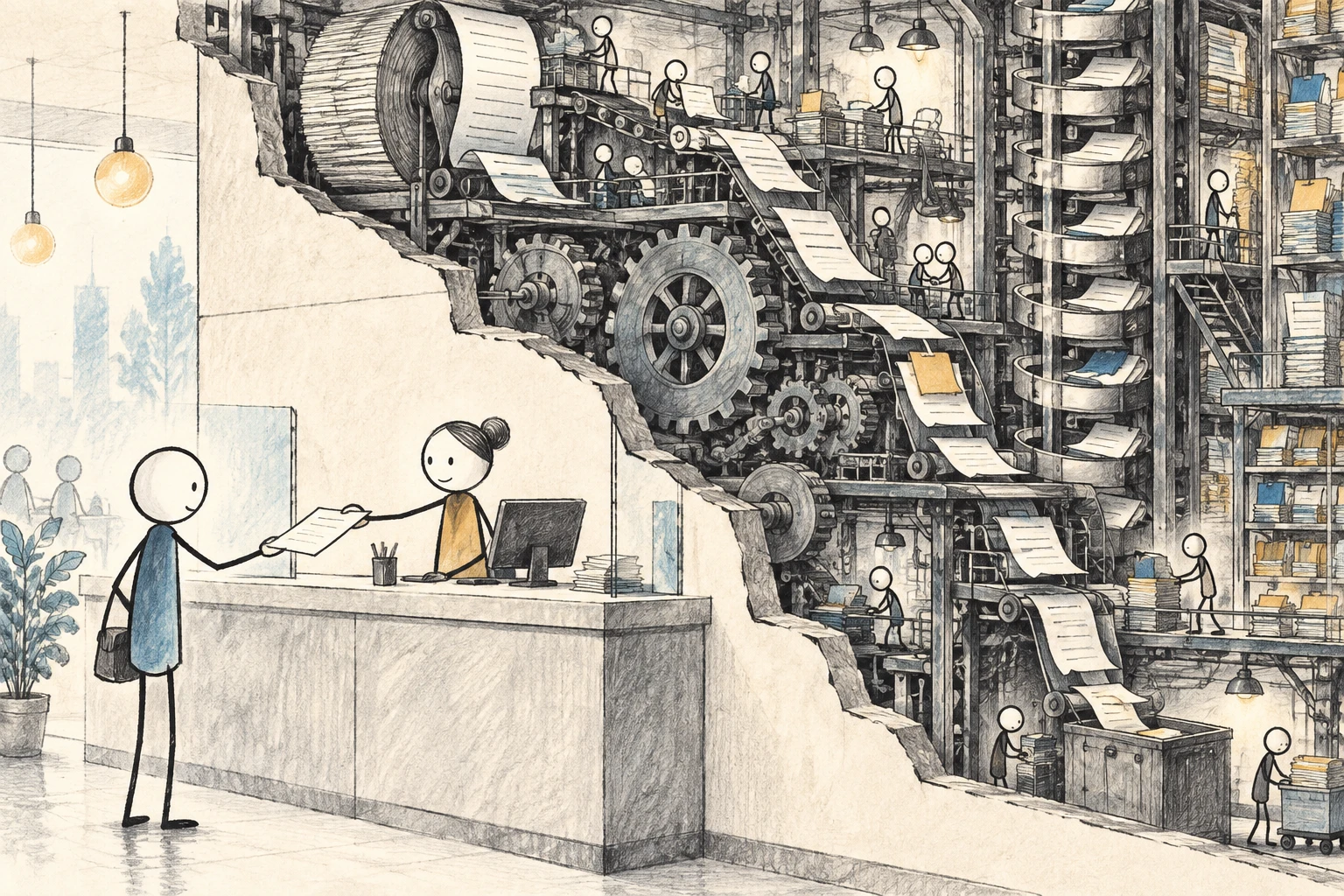
You came for a document.
A person takes time off, catches a bus and asks a public office for a document. When the visit goes smoothly, they notice the clerk. They rarely see the instructions, records and decisions that let the clerk finish the job. This example concerns a generic administrative service, not a documented account of anyone’s experience.
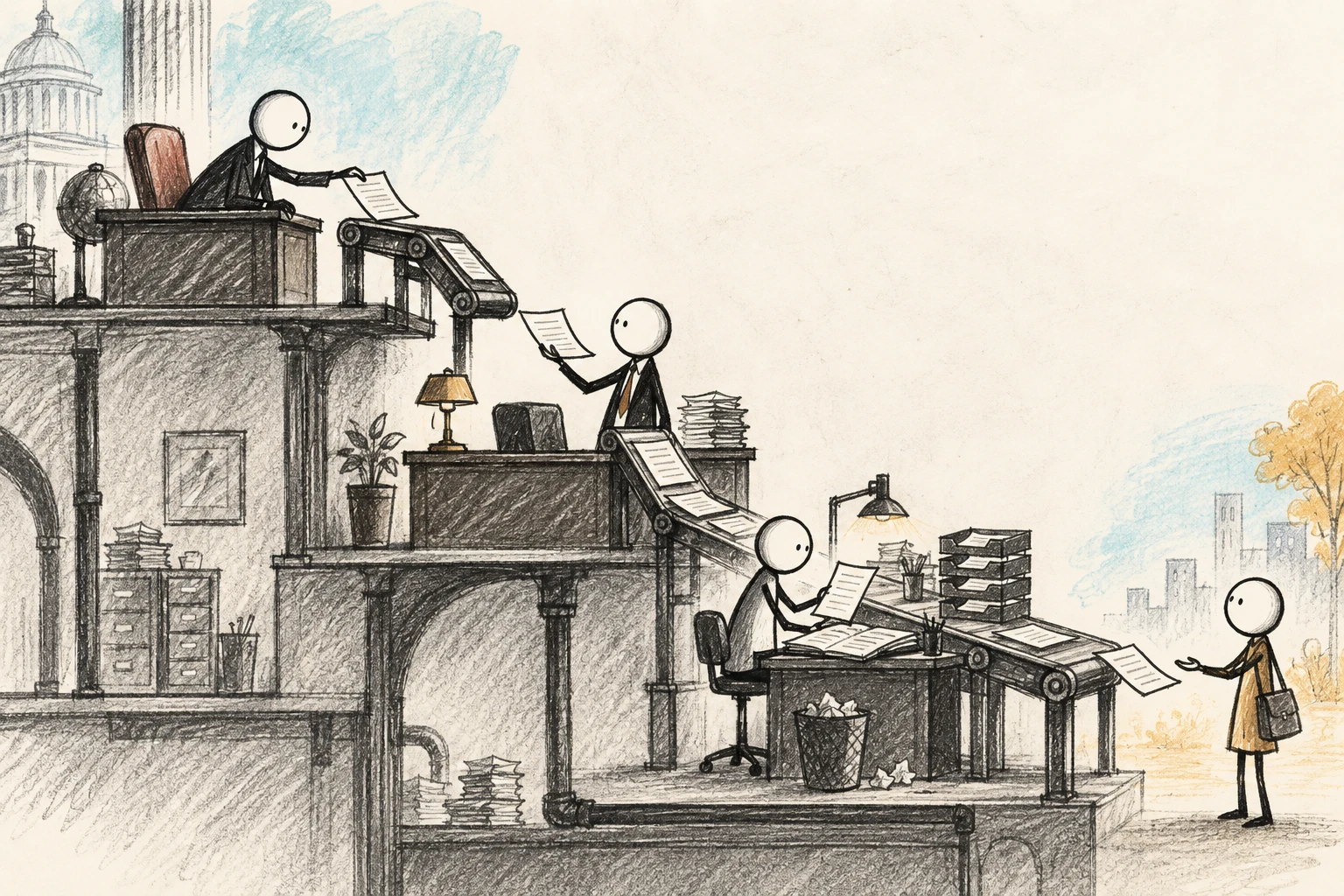
The rule has a long commute.
A decision at the top still needs an implementation path. Someone must explain what changed, decide which cases it affects and give staff usable instructions. Our example assumes the clerk needs that guidance before processing a request. A clear transition rule or authority to continue existing work could keep the counter moving.
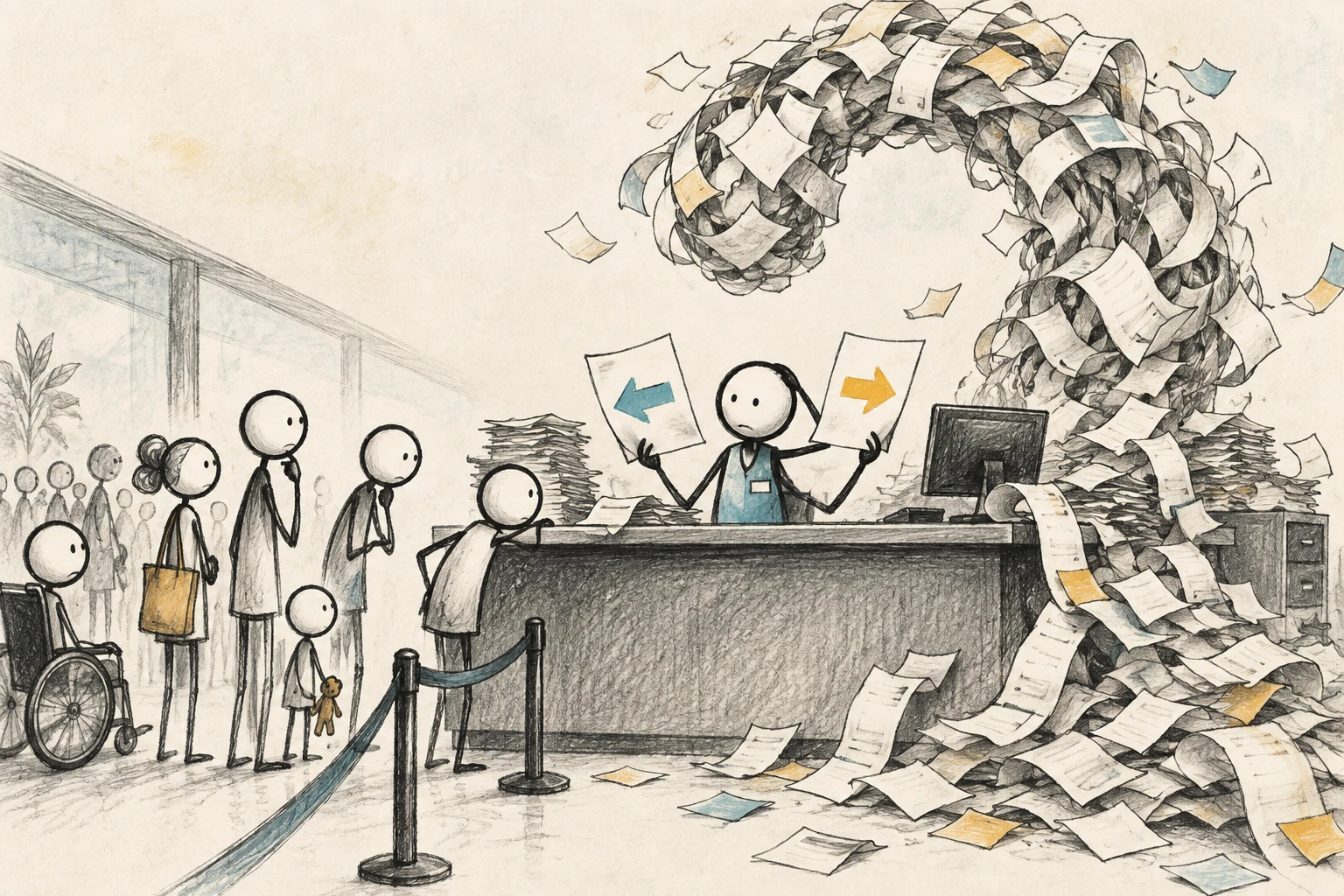
Two instructions. One very long queue.
Suppose the new instruction conflicts with the desk manual and the clerk cannot resolve it. The request pauses while a supervisor checks. If that check cannot finish during the visitor’s available time, the visitor must return. No invented countdown is needed: the relevant limit is the person’s time, not a dramatic clock in the newsroom.
Hypothetical example · 4 steps
- A changed instruction conflicts with the desk manual.
- The clerk pauses a request that needs clarification.
- The answer arrives after the visitor has to leave.
- The visitor makes another trip to finish the request.
What must be true: Staff cannot resolve the conflict immediately, the person cannot stay, and the office requires another visit. Remote completion, a clear interim rule or a timely decision would prevent that final consequence.
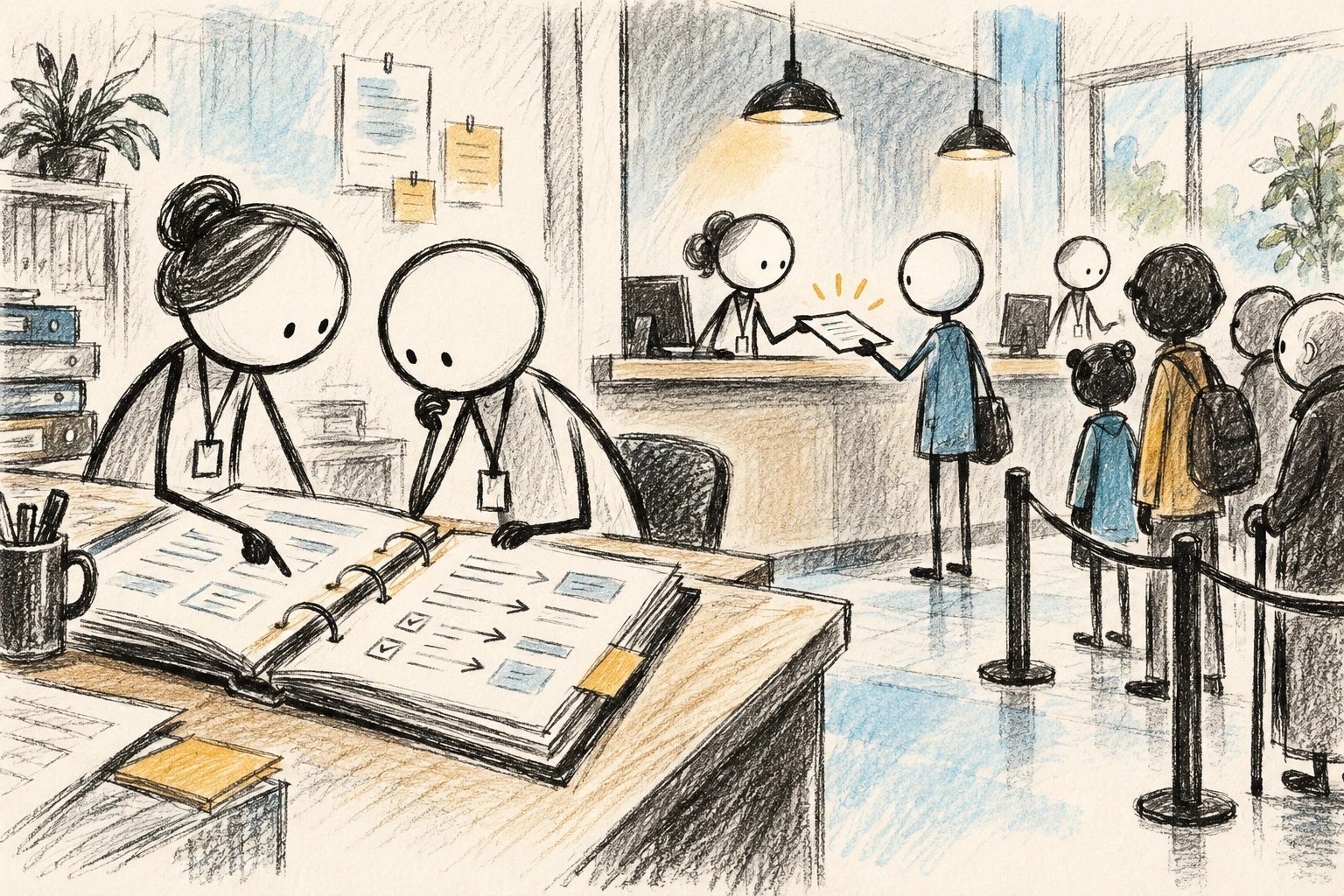
Give the counter an answer.
A useful response gives staff a clear interim procedure, an accountable person who can resolve exceptions and a way to tell visitors what happens next. Another counter helps only if its staff can actually process the case. In this example, clarification before the visitor leaves—or completion without another visit—can break the chain.
Example boundaries and reporting evidence
This is a hypothetical model of an administrative delay. The drawings are visual metaphors, not depictions of a reported incident. They do not establish that any policy covered below caused a service interruption, a funding cut or a missed appointment. Each news item retains its own evidence and uncertainty. No specific legal duty, eligibility decision or processing timeline should be inferred from this example.